Bruce Weber’s ‘My Education’ is a masterclass in trust, intimacy, and the art of portrait photography
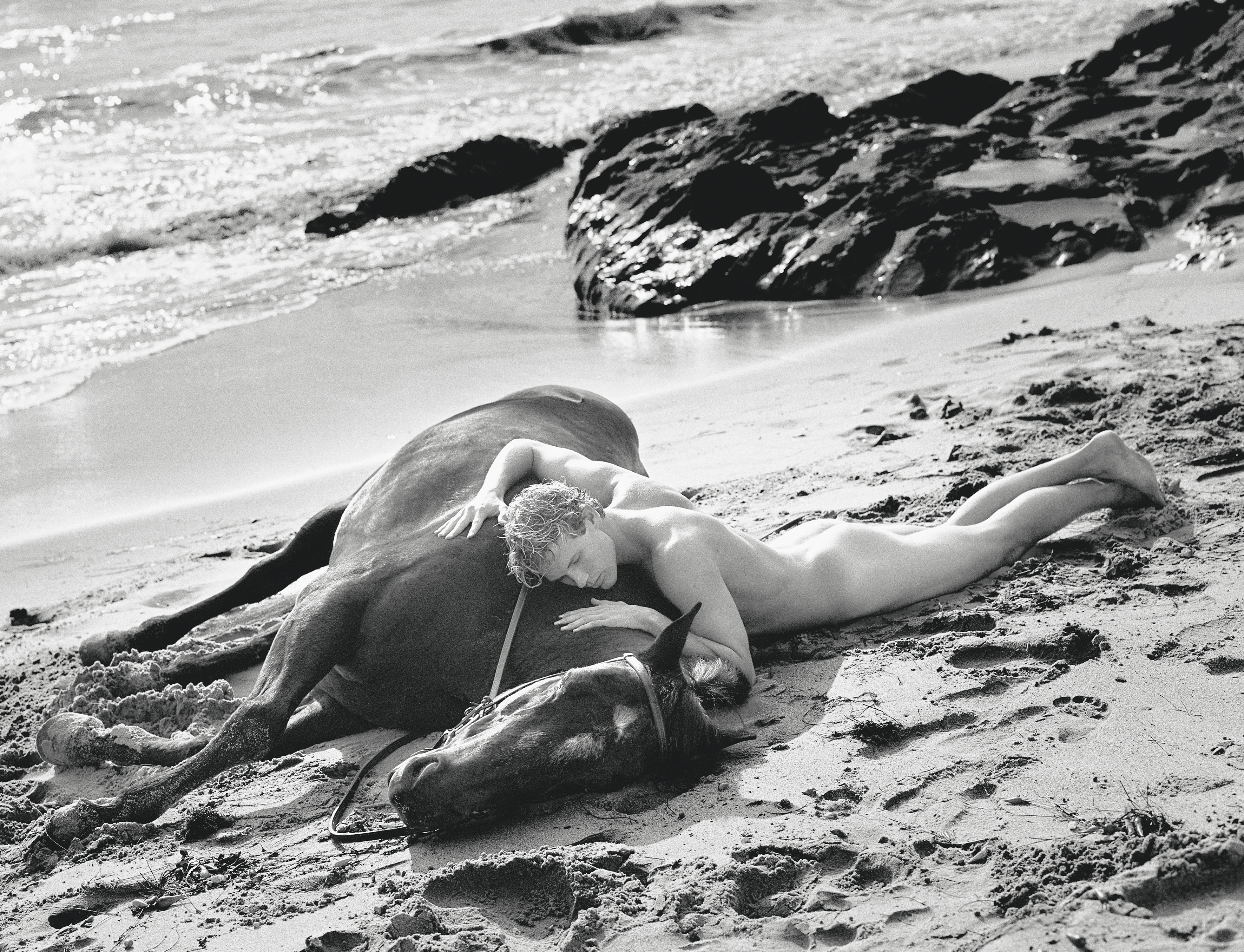
Bruce Weber’s photographs have a way of pulling you in. Not because they shout for attention, but because they make you feel present in the moment. Whether it’s a portrait of a cultural icon or a quiet, unexpected moment between a family, his images carry a sense of intimacy that lets you step inside the frame.
That quality is at the heart of My Education, his monumental new Taschen photography book release. A 564-page visual journey through decades of work, from his most iconic fashion photographs to previously unseen and personal images.
This is no standard career retrospective. Rather than tracing a neat chronology, the book is structured thematically, moving through ideas that have shaped Weber’s vision – family, physicality, sexuality, creativity, and humanism. The result is something closer to a conversation than a timeline. We see how Weber’s approach to photography is tied less to aesthetics or trend and more to curiosity, an ongoing commitment to being awake to the world.


For photographers, this book feels like a blueprint. Not in a ‘how to copy Weber’ sense, but as a reminder that a style isn’t just about color palettes or lighting setups. It’s about the feeling. About the approach. There’s a lesson in how Weber connects with his subjects, whether that’s Leonardo DiCaprio, Louise Bourgeois, or an anonymous figure caught in a fleeting moment, and makes them feel alive on the page. His portraits are as much about empathy as they are about composition.
What stands out, too, is his mastery of photographing groups. Many photographers struggle to balance individual presence with collective energy, but Weber frames his groups like a director shaping a scene. Each person is alive and distinct, yet their connections to one another buzz through the frame. For anyone who photographs weddings, events, or editorial spreads, studying Weber’s group portraits is like taking a private masterclass.

One of the main feelings that comes across in Weber’s work is trust. There’s a confidence in the way he documents intimate family moments; those rare glimpses few ever witness, let alone outsiders. Weber is not an intruder, however. He’s a trusted presence, invited to capture the vulnerable, the spontaneous, the personal. That trust pulls the viewer in, making us feel like silent witnesses to the human condition.
What I love about My Education is the sense of journey it offers. It’s not only a collection of greatest hits, though, of course, the iconic Ralph Lauren and Calvin Klein campaigns are here, as well as editorial work for Vogue, GQ, W Magazine, and Vanity Fair. But the book also dives into rarely seen reportage and personal projects, the kind of photographs that reveal the soul behind the public image.
Seeing decades of work in one place has a grounding effect. It’s a reminder that a photographic voice is built slowly, over time, shaped by experimentation, persistence, and collaboration. Weber’s journey is laid bare in this release. His evolution as a photographer and filmmaker, and his creative partnerships with figures like Grace Coddington, Dennis Freedman, and the late Stella Tennant. Deep, sustaining collaborations that were born from mutual trust and a shared vision.

One story that particularly stood out to me was Weber’s recollection of photographing Ingmar Bergman. He describes how he deliberately broke the rules during the shoot, letting go of conventions in favor of capturing something truer, more raw. That anecdote felt emblematic of the whole book and a reminder that growth as an artist often means taking risks and trusting your instincts.
One of the surprises of My Education is how text plays a role in framing the images. Weaved throughout the book are excerpts from Charles Bukowski, Rupert Brooke, John Steinbeck, and others, alongside Weber’s own anecdotes. These passages add a poetic undercurrent, echoing the themes of longing, beauty, and human connection that run through his photographs.
This interplay of word and image is something I find particularly inspiring. As photographers, we often focus solely on the visual, but here’s a reminder that writing and photography can enrich one another. A line of text can open up a photograph in unexpected ways, adding depth and emotion that stays with you long after the page has turned.

When I recently wrote about Louis Stettner, I called him a source of wisdom for street photographers. In the same way, Bruce Weber is a touchstone for anyone interested in portraiture, though his lessons go beyond technique. Looking at his work, you realize that great portraits aren’t just dependent on the subject’s fame or beauty but come from presence. The ability to connect with the person in front of you, to understand their world, and to translate that into a feeling.
At 564 pages, this isn’t a book you flick through. It’s one you spend time with. It invites you to slow down and to think about the relationships behind the camera and the moments between the frames. For me, it feels like a map of what a creative life can look like. A series of explorations, collaborations, risks, and revelations.
Bruce Weber. My Education is published by Taschen and is available to order now for $150 / £125 (for immediate release in the UK and a September release in the US). For photography book collectors like me, this is a beautiful release and one that you’ll revisit over and over again.

you may also like
Check out our guides to the best books on photography and the best lens for portraits.
link